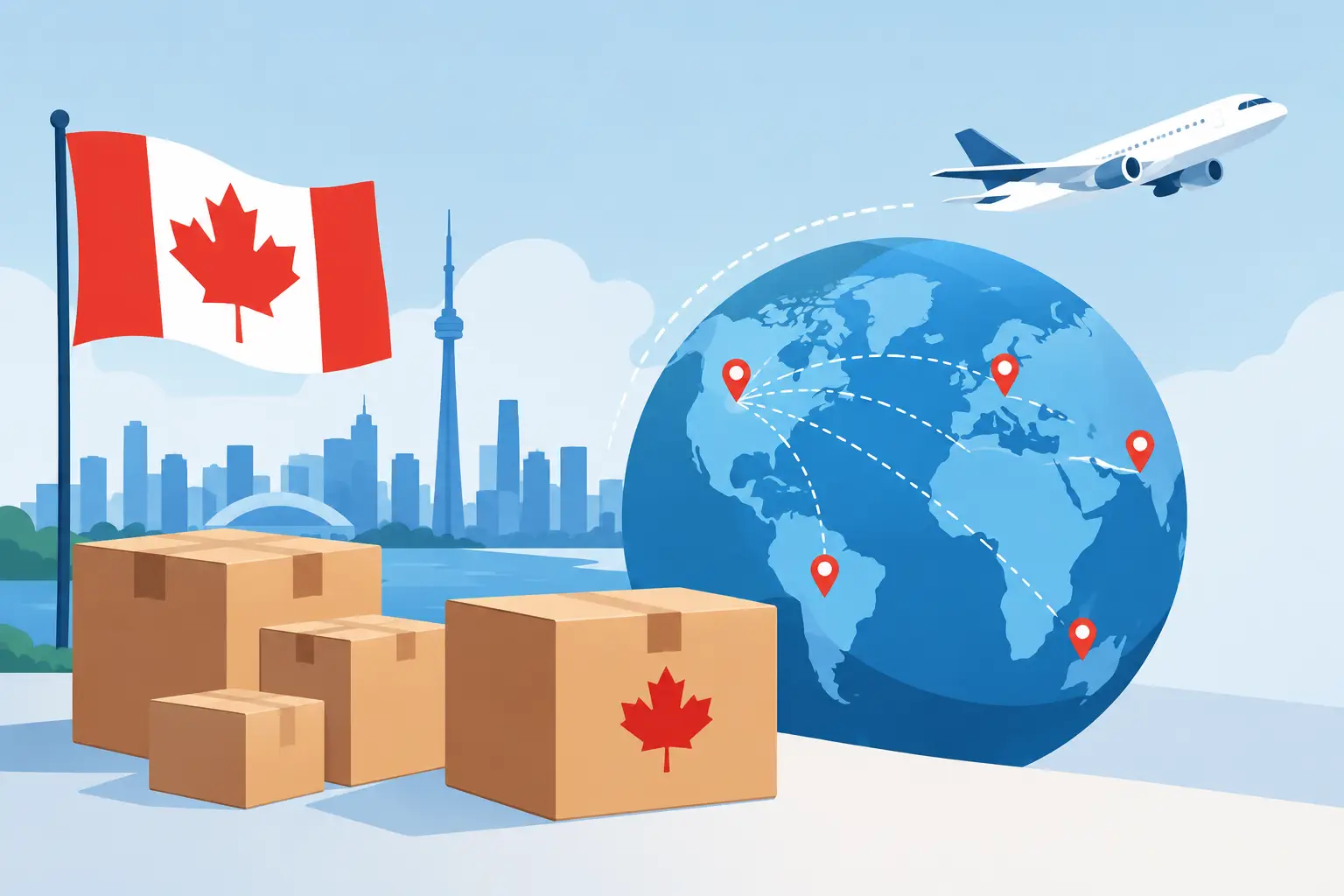
A parcel can be packed and ready in minutes, but crossing a border adds decisions that affect cost, timing, and delivery. International parcel shipping from Canada works best when the shipment is prepared correctly before it reaches a courier network. A clear description of the contents, accurate value, secure packaging, and the right service level can prevent avoidable delays.
For a personal gift, an online order, or recurring customer shipments, the goal is the same: get the parcel to its destination with fewer surprises. Here is what Canadian senders should consider before shipping internationally.
Start With the Destination and Delivery Need
The country matters, but the recipient's postal code and the urgency of the shipment matter too. A parcel headed to a major city may have more delivery options than one traveling to a remote region. Delivery estimates also depend on customs processing, local handoff, and destination-country holidays.
Start by deciding whether the parcel needs an express service or whether a lower-cost option with a longer transit window is suitable. Express shipping can be a practical choice for time-sensitive documents, replacement parts, urgent gifts, or high-value customer orders. Standard international service may be a better fit when delivery speed is flexible and keeping costs down is the priority.
For e-commerce businesses, consistency is often more valuable than choosing the fastest service for every order. Set a delivery expectation that accounts for both transit time and customs clearance. Promising a realistic window creates a better customer experience than quoting the best-case estimate.
Prepare the Parcel for International Shipping From Canada
International parcels pass through more handling points than many domestic shipments. The packaging should protect the contents through sorting facilities, air transport, road movement, and final-mile delivery.
Choose a sturdy box that fits the item without leaving excessive empty space. Wrap fragile items individually and use cushioning so they cannot shift inside the box. Seal every opening with strong packing tape, especially the bottom seams. If a shipment includes liquids, breakables, or multiple pieces, use internal protection that matches the item rather than relying on a label alone.
Size and weight influence the shipping price. Large, lightweight boxes can be charged by dimensional weight, which reflects the space a parcel occupies in transport. Reducing unnecessary box size can lower costs, but do not pack so tightly that the item is exposed to damage. The best package is compact, secure, and accurately measured.
Use a complete recipient address, including apartment or unit number, postal code, and a local phone number when available. A missing unit number or incorrect postal code can turn a straightforward delivery into a delay that is difficult to resolve from another country.
Customs Documents Need Specific, Accurate Details
Customs paperwork is not a formality. It tells border authorities what is entering the country, what it is worth, where it was made, and whether duties or taxes may apply. Vague descriptions such as “gift,” “samples,” or “personal items” can lead to questions because they do not identify the goods clearly.
Describe each item in plain, specific language. “Men’s cotton T-shirt,” “wireless computer mouse,” or “children’s paperback book” provides more useful information than a broad category. Include the quantity, declared value, country of origin, and the appropriate product classification when required. Commercial shipments may also need a commercial invoice with buyer and seller information.
The declared value should reflect the actual value of the goods. Declaring a lower amount to reduce taxes can create compliance issues, weaken insurance claims, and cause problems if customs requests proof of value. For sales, retain invoices or order records in case further information is requested.
A recipient may need to pay duties, taxes, or import fees before delivery, depending on the destination and service selected. Who pays these charges should be clear before the parcel is sent. For businesses, this is particularly important: unexpected charges at delivery can lead to refused packages and unhappy customers.
Check What Can and Cannot Be Sent
Every destination has its own import rules, and courier services also have restrictions. Some items may be prohibited entirely, while others require permits, special documentation, or specific packaging. Common areas that require extra attention include batteries, cosmetics, food, alcohol, medicines, plants, perishables, and products made from regulated animal materials.
Lithium batteries deserve particular care. A battery installed in a device may be accepted under different conditions than a loose spare battery. The type of battery, its capacity, the quantity being shipped, and the destination can all affect eligibility. Never assume that an item accepted for domestic delivery can travel internationally under the same conditions.
If you sell products online, review your product catalog before offering international delivery. A simple destination policy can help you identify products that should not be shipped to certain countries. This saves time after an order is placed and reduces the chance of a parcel being held, returned, or destroyed by authorities.
Choose a Service Based on More Than Price
The lowest quoted price is not always the lowest overall cost. Consider the service's estimated transit time, tracking coverage, delivery area, customs support, and options for proof of delivery. These factors can matter more than a small difference in shipping price, especially for customer orders or important personal shipments.
Tracking is useful because it gives both sender and recipient visibility after the parcel leaves Canada. It can show acceptance, movement through transit hubs, customs activity, and delivery progress. A tracking update that shows a customs delay does not always mean there is a problem. It may mean authorities need more time to process a high volume of shipments or review the shipment details.
For frequent shippers, a coordinated courier service can reduce the work of comparing providers and preparing each shipment from scratch. Shippzy helps Canadian senders arrange international courier services through a straightforward shipping process, whether they are sending an occasional parcel or managing regular cross-border orders.
Build Time Into Your Shipping Plan
Carrier transit time is only one part of the delivery timeline. Weekends, public holidays, weather events, customs inspections, incomplete documents, and delivery attempts can all affect the final arrival date. This is why shipping an important parcel at the last possible moment is risky, even when an express option is available.
Send early when a parcel is tied to a holiday, event, product launch, or customer deadline. If the item is irreplaceable or especially valuable, keep a record of its contents, declared value, packaging condition, and tracking number. These details are useful if you need to follow up on a delay or submit a claim.
Businesses should also consider their return process before shipping internationally. Returns can be more expensive and more complicated across borders. Clear product descriptions, accurate sizing information, and good pre-shipment quality checks can reduce returns before they begin.
A Better Shipment Starts Before Pickup
The most reliable international shipments are usually the least complicated at the border. They are packed for the journey, labeled correctly, described accurately, and sent with a service level that matches the recipient's needs. That preparation gives the parcel its best chance of moving through each handoff without unnecessary interruption.
Before sending, take one final look at the address, item description, declared value, and packaging. A few careful minutes before pickup can make the difference between a routine delivery and a preventable cross-border delay.